
English| EUR
Suggested for you
More currencies
Choose a language
Tsukiji Outer Market hosts private sushi workshops that pair ingredient sourcing with hands-on instruction. Participants learn the fundamentals of edomae-style preparation in small groups, often starting with a guided market walk before moving to a teaching kitchen. These sessions run independently of the market's public hours and require advance booking through culinary tour operators.
Quick answer
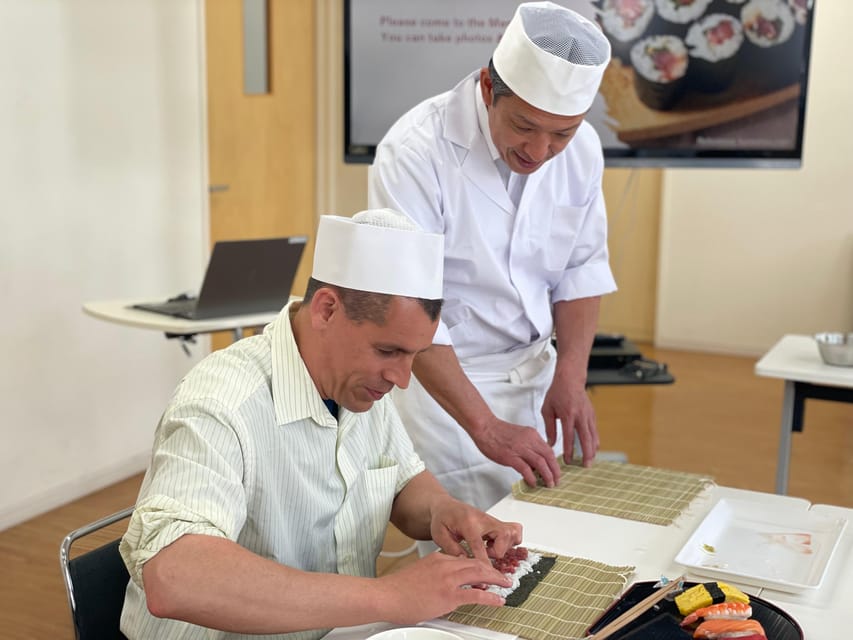
Sushi cooking classes at Tsukiji Outer Market are private paid experiences led by local chefs, typically lasting two to three hours. Most workshops begin with ingredient selection at market stalls, then move to a nearby kitchen where participants practice knife cuts, sushi rice seasoning with rice vinegar and sugar, and nigiri shaping. Classes accommodate four to eight students and include the meal you prepare.
Tsukiji Outer Market remains Tokyo's most concentrated source of restaurant-grade seafood, even after the wholesale auction moved to Toyosu in 2018. The distinction matters for culinary instruction: chefs teaching sushi technique can still walk students through stalls stocked with live kuruma ebi, line-caught aji, and salt-cured kohada, then demonstrate how each species dictates handling and knife angle. Most sushi cooking classes structure the session around three core skills. Knife work comes first—participants learn the yanagiba pull stroke used to slice sashimi against the grain, maintaining the texture of raw tuna or tai. Rice preparation follows: instructors demonstrate the ratio of short-grain japonica to water, the timing of rice vinegar addition while the grains are still warm, and the folding technique that coats each grain without mashing the structure. The final segment focuses on nigiri assembly—how much rice to use, the finger pressure that binds it without compacting it, and the single smooth motion that drapes the fish across the top. Workshops typically operate between late morning and early afternoon, scheduled after the market's professional wholesale period concludes around nine. Tour operators partner with working sushi chefs who teach in small kitchens near the market perimeter, often within walking distance of Tsukiji Station. Class sizes remain deliberately limited—six to eight participants—so each student receives individual correction on hand position and slicing angle. The meal you assemble during the session serves as lunch, supplemented by miso soup and tamago prepared by the instructor. Several operators offer English-language instruction, and most include a pre-class market walk to source the day's fish. That component is not incidental: students learn to distinguish chu-toro from akami by fat marbling, assess kuruma ebi by leg movement, and recognize the translucence that signals freshness in ika. The Outer Market remains fully operational as a public retail space, open daily from 5:00 AM to 2:00 PM, though cooking classes themselves are private bookings made through culinary tour platforms rather than walk-in arrangements. The pedagogy differs from demonstration-style classes. Instructors expect participants to handle knives, portion rice, and shape each piece of nigiri themselves, with real-time feedback on technique. That hands-on structure explains the longer duration and higher cost relative to market food tours, which involve tasting rather than preparation. For visitors seeking practical skill transfer rather than overview, these workshops provide the repetition and correction required to reproduce edomae technique outside Japan.
“Chefs teaching sushi technique can still walk students through stalls stocked with live kuruma ebi and line-caught aji, then demonstrate how each species dictates handling and knife angle.”
The best time to visit Tsukiji Outer Market for a sushi cooking class is between 09:00 and 13:00. This window avoids the 05:00 to 09:00 professional wholesale period while ensuring shops are still fully active.
—
Arriving between 09:00 and 13:00 on weekdays ensures access to fresh ingredients with fewer crowds than weekends. Most shops are fully operational, making it ideal for sourcing fish before your class.
Mild, 10°C to 20°C
Spring brings pleasant weather for exploring the outdoor stalls before heading indoors to learn sushi preparation. Early booking is necessary as seasonal tourism increases demand.
Mild, 15°C to 25°C
Autumn provides comfortable temperatures and excellent seasonal seafood varieties. Sourcing ingredients during these months enhances the hands-on sushi-making experience.
Verdict: Book your class for a Tuesday, Wednesday, or Thursday morning between 09:00 and 13:00 during October or April.
Traditional sushi preparation relies on precise chemical reactions and historical preservation techniques. Instructors at Tsukiji teach these culinary standards to maintain the integrity of classic Edo-mae cuisine.
Before modern refrigeration, sushi chefs cured fish in salt, vinegar, or soy sauce to prevent spoilage. Today, classes at Tsukiji still teach these historic techniques to balance flavors and enhance the texture of raw seafood.
Traditional sushi rice, or shari, is served at human body temperature to release the vinegar's aroma. This warmth also helps to gently melt the fats in raw fish when placed on the tongue.
Chefs choose between clear rice vinegar (komesu) and red vinegar (akazu), which is made from aged sake lees. Red vinegar dates back to the Edo period and adds a rich, sugar-free umami taste to the rice.
Authentic hon-wasabi must be grated on a sharkskin oroshi using a circular motion to rupture its cells. This process triggers a chemical reaction that releases sweet, complex flavors rather than simple heat.
Slicing raw fish requires a pulling motion called hiki-giri rather than a sawing cut. This single stroke from the heel to the tip of the knife preserves the fish's cellular structure and prevents the meat from tearing.
Certain white-fleshed fish and tuna undergo a controlled aging process known as jukusei to develop deeper flavors. This breaks down proteins into savory amino acids, a practice routinely taught in professional market classes.
The Tsukiji Outer Market operates as a working professional environment where vendors and instructors maintain strict standards. Visitors joining culinary classes should observe market conduct rules and follow instructor hygiene protocols throughout the session.
Tsukiji Outer Market maintains consistent daily operating hours for visitors. These hours facilitate access to the market area where various sushi cooking classes are hosted.
Access to the Tsukiji Outer Market public areas is free of charge for all visitors. Culinary instruction requires enrollment in private, third-party cooking classes which carry their own independent fees.
Verdict: While the market itself is free to enter, sushi cooking classes require a paid booking through private providers.
Everything you need to know about sushi cooking classes
Most sushi cooking classes are designed for beginners and provide all necessary tools for learning traditional nigiri techniques. Instructors guide participants through the process of seasoning vinegared rice and handling fresh seafood correctly. These sessions offer a hands-on approach to mastering the fundamentals of Japanese cuisine. You can find available sushi cooking workshops through the official site or linked partners. These platforms provide details on scheduling and help you funnel into booking pages for private sessions. Booking in advance is recommended to ensure availability during your visit to the area. A typical session for these sushi cooking classes lasts between two to four hours depending on the depth of the curriculum. This time includes ingredient preparation and the final tasting of your creations. Participants often appreciate this focused time to learn professional culinary skills. Many providers combine sushi cooking classes with a guided market walk to explain the history of local ingredients. This allows students to appreciate the source of their fish before heading to the kitchen. Please check specific booking descriptions to see if a market tour is included. Age policies vary by provider, so it is important to review the specific requirements for your chosen sushi cooking classes. Some operators offer family-friendly sessions that accommodate younger participants interested in Japanese food. Always verify these details during the reservation process. While the market itself is free to enter, private cooking classes require a separate fee paid to the instructor. Entrance to the public market area is 0 JPY, but this does not cover professional instruction. Ensure your budget accounts for the specific costs of the private lesson. Participants typically do not need to bring specialized equipment, as kitchens provide all tools and aprons. Comfortable clothing is advised for a standing workshop environment. Having a camera or phone for photos is standard, and an empty stomach is highly encouraged.