
English| EUR
Suggested for you
More currencies
Choose a language
Sushi-making classes at Tsukiji Outer Market supply every tool participants touch, but understanding what each piece does—and which ones you can work around—changes how confidently you approach your first roll. The bamboo mat sits at the center of that question. Here's what it actually does and when you need it.
Quick answer
A bamboo sushi mat, or makisu, is not strictly required to make sushi, but it provides control and even pressure when shaping maki rolls. Nigiri and sashimi require no mat at all—only your hands and a sharp knife. For rolled sushi, a clean kitchen towel or parchment paper can substitute, though the result may lack the tight, uniform cylinder a mat produces. Most Tsukiji sushi-making classes provide mats as part of the setup, so participants never handle the logistics themselves.
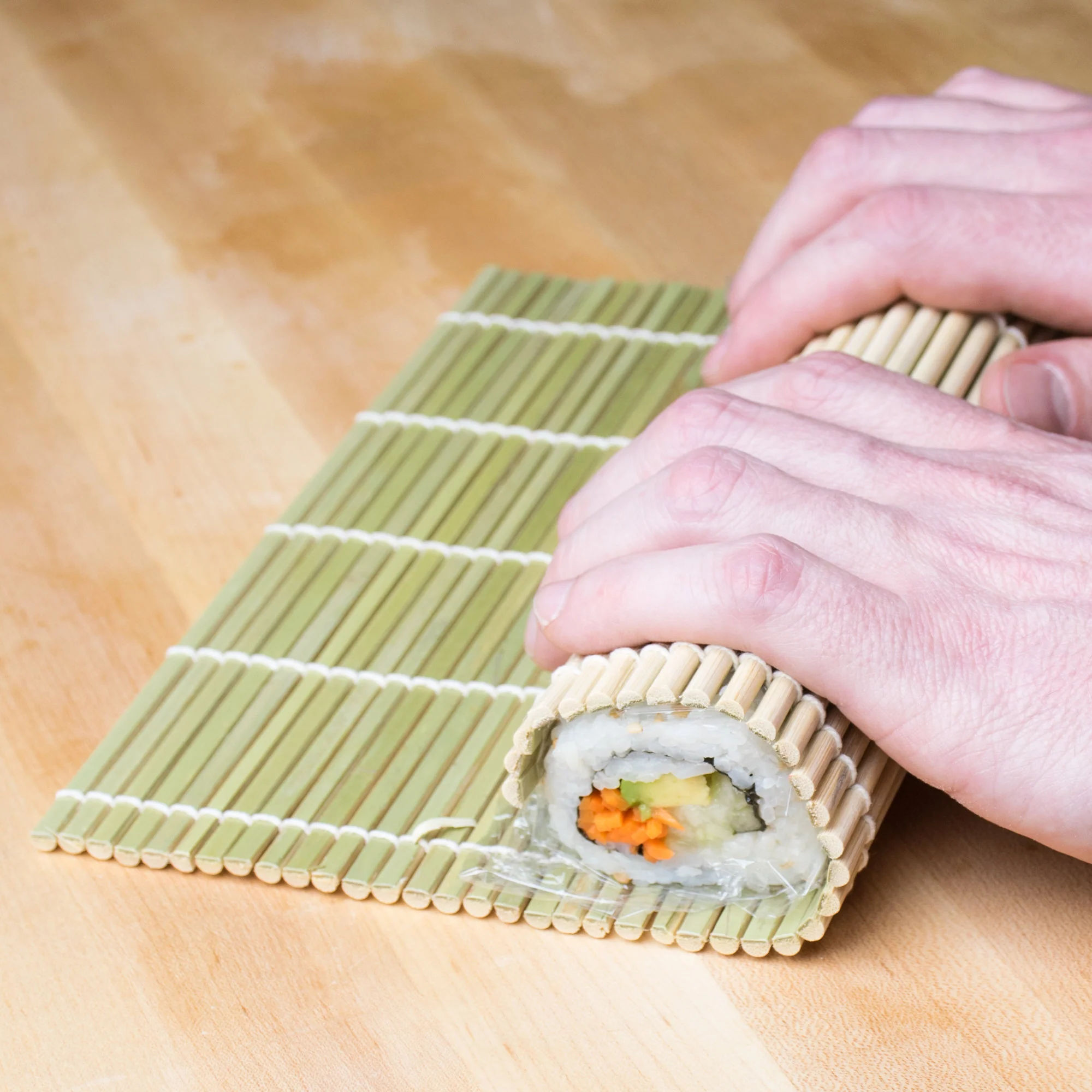
The makisu—a flat mat woven from bamboo slats and cotton thread—has been the standard tool for shaping norimaki since the Edo period, yet its absence does not prevent sushi from being made. Nigiri, the style most associated with Tokyo's fish markets, relies entirely on hand-forming: a thumb presses seasoned rice into an oblong mound while fingers shape the sides, and a slice of fish drapes over the top. No mat enters the process. Sashimi, which skips rice entirely, demands only a yanagiba or sharp blade and a steady hand. The mat becomes relevant only when nori enters the equation and rice must be compressed into a roll. When you do need a sushi mat, its function is mechanical rather than ceremonial. The bamboo slats distribute pressure evenly across the length of the roll, preventing rice from bunching at one end or filling from slipping out the sides. A chef lays nori on the mat, spreads rice in a thin, even layer, arranges the filling in a line, then lifts the edge of the mat and rolls forward, using the slats to guide the shape and tighten the seam. The mat never touches the food directly—it acts as a flexible surface that translates the motion of your hands into controlled compression. Without it, fingers alone must apply that pressure, and the roll often emerges lopsided or loose. Substitutes exist, and many work well enough for a first attempt. A clean, lint-free kitchen towel folded into a rectangle mimics the mat's surface, though it lacks the rigidity that keeps the roll from collapsing under its own weight. Parchment paper offers a smooth, non-stick alternative but provides even less structure. Plastic wrap, stretched taut over a cutting board, allows the rice to be shaped with your hands and then peeled away, though the technique requires more practice and produces a less uniform result. These workarounds function in a home kitchen where the goal is edible rather than precise, but they expose why the mat persists: it reduces the variables a beginner must manage simultaneously. Tsukiji's sushi-making classes, which operate in small storefronts and dedicated culinary spaces around the Outer Market, eliminate the question entirely by supplying every tool at the start of the session. Participants arrive empty-handed, and the instructor distributes bamboo mats, knives, rice paddles, and bowls of prepared ingredients before any work begins. The Outer Market itself, open from 09:00 to 14:00 daily, holds dozens of kitchenware vendors where professional-grade makisu can be purchased for a few hundred yen, but tourists booking a class never need to visit them. The mat becomes a teaching tool rather than a prerequisite, and the instructor demonstrates its use in real time. Understanding whether you need a sushi mat to make sushi depends less on the dish itself and more on the style you intend to practice. Hand-formed sushi exists independent of any equipment beyond a knife. Rolled sushi benefits significantly from a mat's structure, and while alternatives can bridge the gap in a home kitchen, they rarely match the control a woven bamboo surface provides. The market's vendors stock every tool a serious practitioner might want, but its classes assume no prior ownership—just the willingness to learn a technique that has been refined in Tokyo for two centuries.
“The mat becomes relevant only when nori enters the equation and rice must be compressed into a roll.”
A sushi mat (makisu) applies even pressure to roll ingredients tightly, but beginners can achieve similar results with household items. Each alternative below takes the same 2–3 minutes per roll once you understand the motion.
The bamboo mat distributes pressure evenly across the nori sheet, compressing rice and filling into a uniform cylinder. Without it, uneven hand pressure creates loose rolls that fall apart when sliced.
Lay a lint-free dish towel flat, place nori on top, and roll by lifting the towel's edge while tucking the filling forward. The towel mimics the mat's rigidity and prevents rice from sticking to your hands.
A flexible silicone mat provides a non-stick surface and enough structure to guide the roll. Dampen it lightly so the nori adheres during the first turn, then release naturally as you complete the cylinder.
Cut parchment to the size of a nori sheet, assemble your roll on top, then use the paper to lift and compress. This method works best for inside-out rolls where rice faces outward.
Wet your palms, place the filled nori on a flat surface, and use both hands to fold the near edge over the filling. Apply firm, even pressure along the seam, then roll forward in one smooth motion, sealing with a few grains of rice.
Regardless of tool, gently press both ends of the finished roll to redistribute any filling that shifted. This step ensures clean, uniform slices when you cut with a sharp, dampened knife.
Even when skipping the mat, most failures stem from rice errors and improper substitutes. These pitfalls turn simple rolls into sticky disasters.
Using a dry kitchen towel instead of damp cloth
A dry towel pulls moisture from the rice and causes it to stick and tear. Dampen the cloth lightly so rice releases cleanly without absorbing water.
Skipping the vinegar seasoning to save time
Unseasoned rice lacks the tackiness that holds a roll together and tastes flat. Mix rice vinegar, sugar, and salt while the rice is still warm for proper adhesion and flavor.
Spreading rice while it is still hot
Hot rice is too soft and smears across the nori, making it soggy and impossible to roll tightly. Let it cool to room temperature so grains hold their shape and the nori stays crisp.
Overfilling the roll to maximize ingredients
Excess filling prevents the nori from closing and causes ingredients to spill out during rolling. Use a thin, even layer—roughly one-third the width of the nori sheet.
Rolling without applying consistent pressure
Loose rolling leaves gaps that cause the roll to fall apart when sliced. Press firmly and evenly as you roll, using your fingers to tuck and compact the ingredients.
Slicing with a dull or sticky knife
A dull blade crushes the roll, and a sticky blade drags rice and filling out of place. Wipe the knife with a damp cloth between each cut and ensure it is sharp.
Finding the right sushi mat at Tsukiji Outer Market and maintaining it properly ensures clean, professional rolls at home.
Buy mats with flat bamboo slats for inside-out rolls. The flat surface prevents rice from squeezing between the gaps, ensuring a smoother release.
Head to Tsukiji Hitachiya at 4-12-5 Tsukiji to purchase authentic, chef-grade bamboo kitchenware. Their staff can guide you to hand-tied mats designed for specific roll thicknesses.
Wash bamboo mats with a scrub brush and warm water without soap, then air-dry completely in a shaded, ventilated space. Storing a damp bamboo mat leads to black mold growth.
Stretch plastic wrap tightly around your bamboo mat before rolling inside-out sushi. This eliminates sticking and keeps the cotton strings clean from stray rice starch.
If you prefer dishwasher-safe convenience, purchase modern embossed plastic mats at specialty shops like Sekaiya. The textured surfaces release rice easily and eliminate the risk of wood splinters.
Tsukiji Outer Market is open daily for visitors seeking high-quality ingredients and kitchen tools. Most shops operate within a consistent schedule throughout the week.
Everything you need to know about do you need a sushi mat to make sushi
While a bamboo mat, or makisu, is common for rolling maki, it is not strictly required for all styles of preparation. Many professional chefs can shape rolls using only their hands or clean kitchen towels. Understanding do you need a sushi mat to make sushi helps beginners focus on high-quality ingredients like vinegared rice and fresh seafood instead of complex gadgets. If you are learning the craft, instructors often demonstrate how to achieve perfect results regardless of tool availability.
Nigiri, which features slices of raw fish draped over vinegared rice, relies entirely on hand-molding techniques rather than mats. This traditional style focuses on the temperature and pressure of the palms to maintain ingredient integrity. Many students ask do you need a sushi mat to make sushi when they actually want to master this specific hand-pressing skill. By focusing on finger placement and rice density, you can create professional-grade nigiri in any environment.
When attending a class at this historic location, the primary focus is on sourcing fresh ingredients and mastering knife skills. You do not need to bring your own specialized gear, as facilities provide everything necessary for the experience. The instructors will clarify do you need a sushi mat to make sushi during your session while guiding you through the authentic process. Professional guidance ensures you learn the proper way to handle nori and sushi-meshi effectively.
Learning the art of sushi in the heart of Tokyo is accessible for all skill levels, regardless of previous experience with kitchen tools. The local instructors emphasize historical techniques that prioritize the quality of fish over the complexity of equipment. You will quickly discover that sushi preparation is more about practice and patience than owning an extensive collection of professional culinary instruments.
While a mat is helpful for creating tight cylinders of inside-out rolls, it is not always necessary for simple hand rolls or temaki. Hand-rolling techniques allow for a more rustic and enjoyable presentation that is common in casual dining settings. Knowing when to use a mat is part of the broader education provided during your culinary training in the district.
For the best experience, plan your visit during the designated market operation hours to ensure you see the full range of vendors. Professional buyers are most active in the early morning, so arriving later allows for a smoother experience. Check our booking information to secure a spot for an educational session where you can learn these techniques firsthand.