
English| EUR
Suggested for you
More currencies
Choose a language
Tsukiji Outer Market remains one of Tokyo's most active food districts, and its sushi-making workshops draw visitors who want to move beyond observation. These classes run in compact morning windows, timed to the market's own rhythm, and require advance coordination.
Quick answer
Sushi-making classes at Tsukiji Outer Market typically operate Monday through Saturday from 09:30 to 13:00, with sessions closed on Wednesdays and Sundays. Standard per-person pricing is 15,400 JPY. Classes are held within the Outer Market district in Chuo City, Tokyo, and most workshops begin in the morning to align with ingredient freshness and market activity.
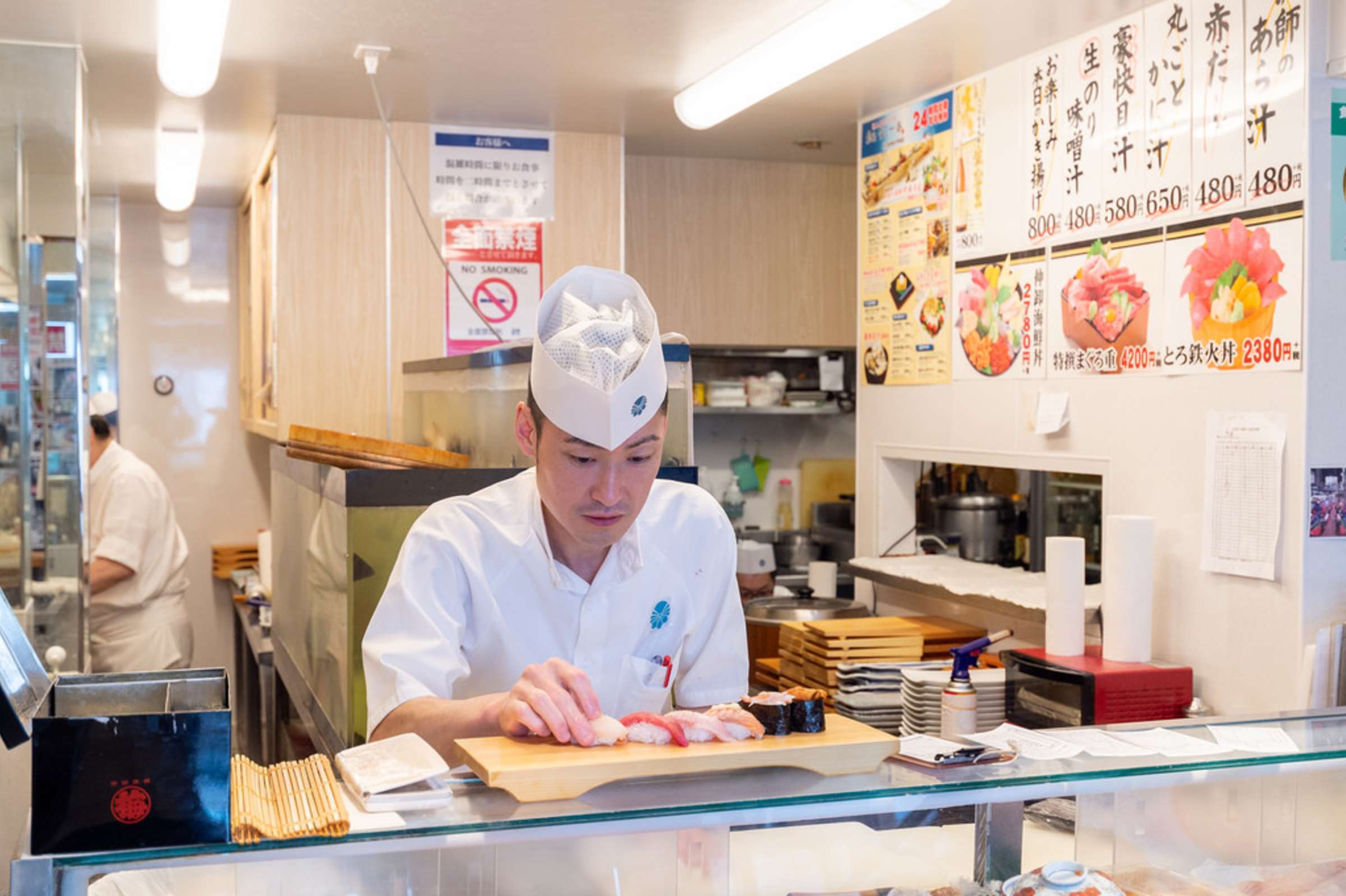
The Tsukiji Outer Market survived the 2018 relocation of the wholesale auction halls to Toyosu, and its warren of storefronts, knife vendors, and kitchenware stalls continues to supply Tokyo's restaurant trade. Sushi-making classes embedded in this district operate not as cultural theater but as working culinary instruction, often taught by chefs who source their fish from the same suppliers lining the market lanes. A tsukiji market sushi making class is not a drop-in activity. Sessions occupy a three-and-a-half-hour block, running from mid-morning into early afternoon, and class sizes are capped to preserve the instructor-to-student ratio required for knife work and rice preparation. The 09:30 start allows participants to see the tail end of the market's morning trade—vendors restocking, restaurateurs collecting orders, and the tuna counters still displaying whole loins. By the time the session concludes at 13:00, the market itself begins to wind down, many stalls closing or reducing inventory for the day. The Outer Market's geography is compact but fragmented. Cooking studios are not centrally signposted; they occupy second-floor spaces above fishmongers or sit tucked behind storefronts that sell dried seaweed and bonito flakes. Locating the correct entrance often requires a street address, a phone number for real-time navigation, and patience with Tokyo's nested alley system. The district lies a short walk from Tsukiji Station on the Hibiya Line, but first-time visitors routinely overshoot the Outer Market boundary and end up in the adjacent residential blocks or the shuttered inner wholesale zone. Instruction centers on nigiri technique—how to portion rice, the angle of the knife against raw fish, the pressure required to shape without compressing. Participants work with maguro, salmon, and seasonal white fish, all filleted that morning. The rice itself, seasoned with a house blend of vinegar, sugar, and salt, is prepared in small batches and kept at body temperature throughout the session. Rolling maki comes later in the sequence, often as a secondary skill once the nigiri rhythm is established. The class concludes with a seated tasting of each participant's work, followed by miso soup and a short market walk led by the instructor, who points out the suppliers whose fish appeared on the cutting board an hour earlier. Booking requires a deposit, and cancellations within 48 hours forfeit the full fee. The studio's contact line—03-6912-0584—handles reservations in Japanese and English, though response times stretch during peak travel months. The official site, tsukiji-cooking.com, lists available dates and accepts online bookings, but calendar slots fill quickly between April and October, when Tokyo's culinary tourism peaks.
“The class concludes with a seated tasting of each participant's work, followed by a short market walk led by the instructor.”
The sushi making class at Tsukiji Outer Market operates on a regular weekly schedule from Monday to Saturday, with specific closures on Wednesdays and Sundays.
The Tsukiji Outer Market is located in Chuo City, Tokyo. The most efficient way to access the area is by utilizing Tokyo's extensive rail network.
Hibiya Line to Tsukiji Station
Oedo Line to Tsukiji Shijo Station
From Ginza district
Navigate toward the Tsukiji Hongan-ji Temple exit when arriving by subway to reach the market area directly. Traffic in the immediate vicinity is dense, so public transport is recommended over driving.
The best arrival window for a sushi making class is 09:30–12:30, as scheduling aligns with the peak morning hours when market activity and ingredient freshness are at their highest. Arriving within this timeframe ensures you experience the market's vibrant atmosphere before concluding your session.
Mild, 12°C–23°C; ideal for walking.
Cherry blossom season brings higher foot traffic to outer market stalls.
Cool, 15°C–22°C; comfortable outdoor conditions.
Stable weather makes visiting the market exterior particularly pleasant.
—
Tuesday through Friday mornings offer the most consistent experience for class participants.
Hot, 25°C–32°C; prepare for heat.
Market lanes remain active despite rising temperatures and peak travel volume.
Verdict: The optimal time to attend is Tuesday through Friday within the 09:30–12:30 window during the months of April or October.
The class takes place in a working market environment where respect for ingredients, instructors, and fellow participants ensures a smooth experience. Following these guidelines helps maintain the focused, hands-on atmosphere.
Everything you need to know about tsukiji market sushi making class
The program takes place at the Tsukiji Outer Market in Chuo City, Tokyo, Japan. This historic culinary hub provides an authentic backdrop for your hands-on experience with fresh seafood.
The entrance fee for a standard tsukiji market sushi making class is 15,400 JPY per person. This fee covers the instruction and materials required for your culinary session.
Classes are available from Monday to Friday, between 09:30 and 13:00. The facility remains closed on Wednesdays and Sundays for market operations.
We recommend arriving between 09:30 and 12:30 to align with market freshness and scheduling. Planning your visit within this window ensures you can fully enjoy the vibrant atmosphere of the Tokyo sushi tour.
The market facility is closed on Sundays, so no sushi making sessions are hosted on that day. You may book your tsukiji market sushi making class on any other weekday, excluding Wednesdays.
Yes, children are welcome to participate in this interactive Japanese cooking experience. Please ensure they are prepared to handle kitchen tools safely during the session.